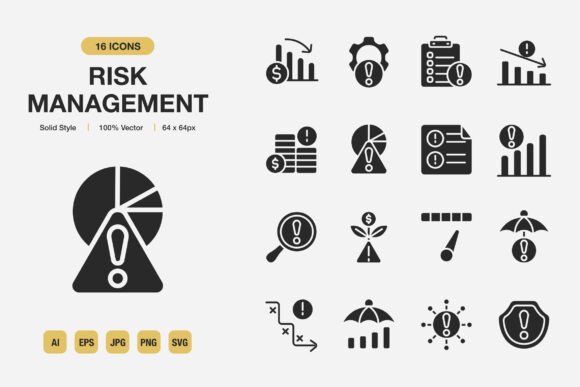
Risk Management Solid Icons: Graphics and Icons for Branding
As a brand designer and content marketer, I always look for design assets that can elevate a campaign without overwhelming it. The Risk Management Solid Icons set caught my attention immediately with its clean, minimalist aesthetic. These icons are more than just visual elements—they’re a tool for creating clarity, consistency, and professional appeal in any marketing project.
The First Impression: Minimalist Design with Purpose
Upon first glance, the Risk Management Solid Icons set exudes a calm, structured energy. The bold lines and solid shapes create a sense of reliability and professionalism. This makes them ideal for branding in industries like finance, consulting, or health and wellness, where trust and clarity are key. The mood is modern yet approachable, making it suitable for both premium and casual brand identities.
These icons have a neutral emotional tone that doesn’t overpower the message they accompany. They work well in lifestyle content, event promotions, and editorial graphics without feeling out of place. Whether used in social media graphics or digital ads, the design supports a clear visual hierarchy while maintaining a cohesive look across platforms.
Real-World Applications in Branding and Marketing
Imagine a small business launching a new product line. The Risk Management Solid Icons could be used in packaging design, product labels, and promotional banners to reinforce a consistent brand identity. For a seasonal offer, these icons could serve as visual anchors in email campaigns, social media posts, and blog graphics, ensuring a unified look across all touchpoints.
In a digital campaign, these icons can act as visual cues in web design, helping users navigate content with ease. They also enhance the readability of infographics and data visualizations by offering a simple, recognizable language. When paired with a strong brand color palette, they add a layer of sophistication that elevates the overall design.
For content creators, the Risk Management Solid Icons are a valuable addition to a content kit. They can be used in Pinterest graphics, Instagram posts, and Canva templates to maintain visual consistency across platforms. Their versatility makes them a go-to choice for bloggers, publishers, and social media managers looking to streamline their creative process.
Supporting Marketing Goals with Visual Clarity
One of the most powerful aspects of the Risk Management Solid Icons is their ability to strengthen a brand’s first impression. In a crowded digital space, a clean, professional look can make all the difference. These icons help establish a stronger visual hierarchy, guiding the audience’s attention without cluttering the design.
They also support better audience trust and recognition. When used consistently across marketing materials, they reinforce brand identity and make the business appear more credible. Whether in a lead magnet, a media kit, or a digital ad, these icons contribute to a more polished and professional appearance.
For small business branding, this set offers a cost-effective way to maintain a high-quality visual presence. It’s especially useful for startups or solo entrepreneurs who need reliable design assets without the complexity of custom illustrations.
Where Risk Management Solid Icons Shine
The Risk Management Solid Icons excel in hero graphics, campaign headers, and product launch visuals. They bring a sense of structure and professionalism that aligns with modern design trends. In branded templates, they provide a consistent visual language that enhances the overall user experience.
They also work well as packaging accents, editorial layouts, and decorative brand elements. For content bundles, these icons add a refined touch that makes the design feel more complete. In promotional banners and social media covers, they help create a visually engaging and cohesive brand image.
When to Use with Caution
While the Risk Management Solid Icons are versatile, there are situations where they may not be the best fit. In formal corporate branding, their minimalism might feel too simplistic compared to more elaborate design elements. In dense information layouts, they could get lost among other visual components.
On small mobile screens, the icons may become difficult to read if not scaled properly. Low-contrast backgrounds can also diminish their impact, making them less effective. For overly minimal brands, these icons might add unnecessary detail, and in text-heavy ads, they could compete with the main message.
Practical Tips for Brand Designers
Before finalizing a campaign, test the Risk Management Solid Icons with your brand’s color palette. Ensure they look good in black and white and that they work well in both SVG and PNG formats. Place them inside real campaign mockups to see how they interact with other design elements.
Preview them on mobile screens to check readability at smaller sizes. Compare them against competitor visuals to ensure they stand out without clashing. Test how they pair with different font styles—serif, sans serif, script, handwritten, or display fonts—to find the best combination.
Review spacing and balance to avoid overcrowding. Confirm that the commercial license allows for use in paid campaigns, client work, or business branding. These steps will help ensure that the icons enhance, rather than hinder, your marketing efforts.
Why Risk Management Solid Icons Are a Strong Design Asset
As a brand designer, I appreciate design assets that offer both functionality and flexibility. The Risk Management Solid Icons set delivers on both fronts. Whether you're working on a digital product, printable design, or commercial design, these icons can help you achieve a polished, professional look.
For content marketers, they provide a reliable toolkit for creating engaging visuals that resonate with your audience. For small business owners, they offer an affordable way to elevate their branding without compromising quality. In the creative marketplace, they represent a smart investment in modern design that supports long-term brand growth.